
10 Aug Nose Thread Lift Procedure: Risk, Recovery, and Consultation
Nose Thread Lift: Risks, Recovery and Limitations
A patient-focused guide to what a nose thread lift involves, who may be suitable, possible changes, recovery, risks and how the procedure differs from surgical rhinoplasty.
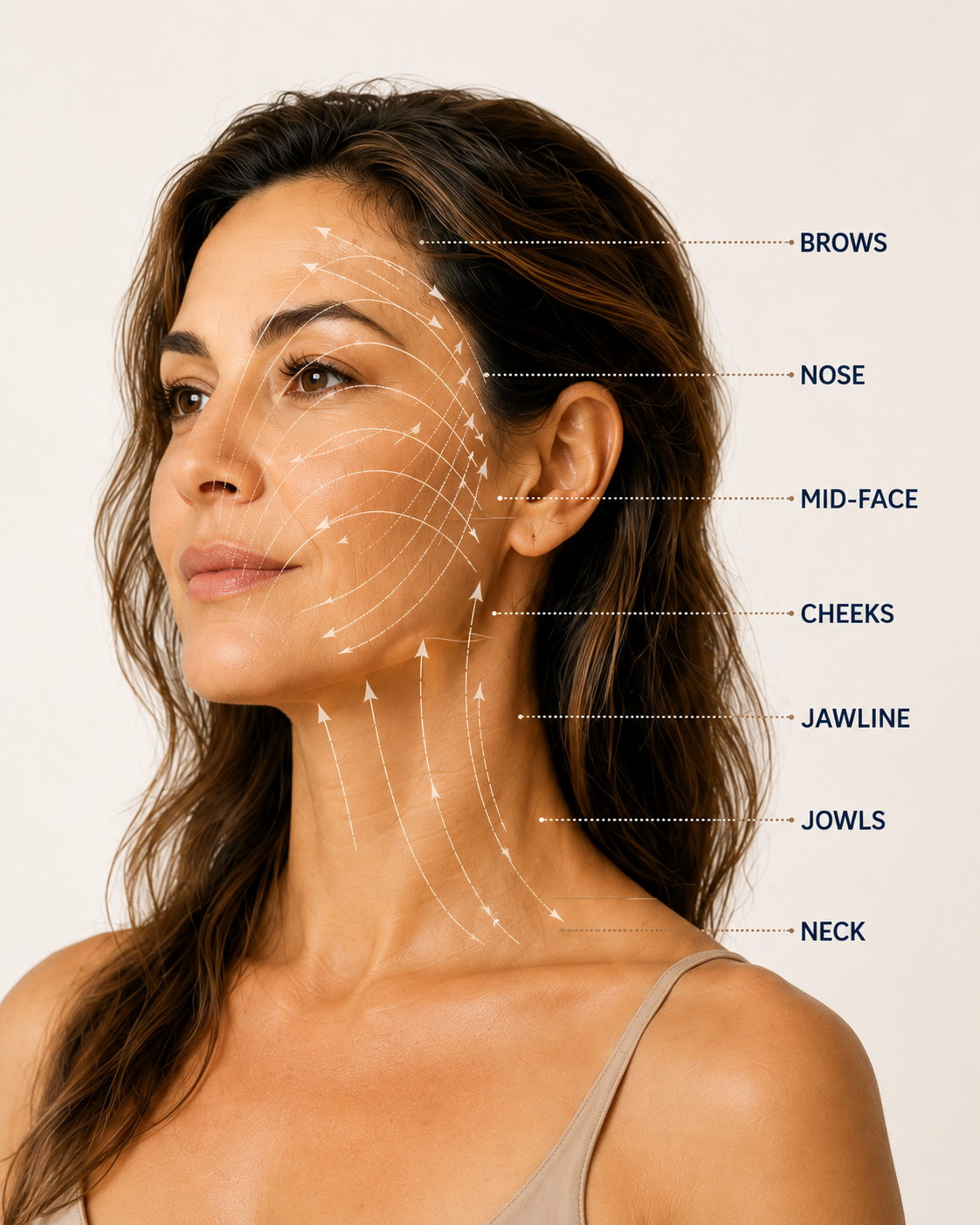
A nose thread lift places medical threads beneath the skin of the nose to provide selected temporary support or contour refinement. It may be researched by adults seeking a less invasive option for certain concerns involving the bridge or tip.
It is not the same as surgical rhinoplasty. A thread lift cannot remove tissue, reduce the actual size of the nose or surgically reshape bone and cartilage. Suitability depends on nasal anatomy, skin thickness, facial proportions, medical history and the degree of change being sought.
Géniale is a doctor-led clinic for men and women providing cosmetic medicine and surgery. Consultations are available in Sydney, Melbourne and the Gold Coast, subject to individual assessment.
Key takeaways
- A nasal thread lift provides temporary support beneath the skin.
- It cannot reduce nasal size or reproduce surgical rhinoplasty.
- Swelling, bruising, asymmetry and thread-related complications can occur.
- Recovery and longevity vary, and medical assessment is required.
What is a nose thread lift?
A nose thread lift, also called a nasal thread lift, uses fine threads introduced through small entry points. Depending on the treatment plan, threads may be positioned along selected parts of the bridge or tip.
What does the procedure involve?
The practitioner assesses nasal anatomy, skin thickness, facial proportions, medical history and goals before deciding whether treatment is appropriate. If it proceeds, thread type, number and position are selected for the individual.
What types of threads are used?
Absorbable materials may include polydioxanone, commonly associated with the term PDO thread lift, and other medical polymers. No material or brand is suitable for every patient.
What can a nose thread lift change?
Selected patients may notice a temporary change in support or contour around the bridge or tip. The degree of change varies with existing structure, skin characteristics, technique and healing.
How does a nose thread lift work?
Some threads engage soft tissue mechanically after placement. The body also develops a healing response around absorbable material. These effects do not amount to surgical reshaping of the nose.
Why do outcomes vary?
The nose is a small, structurally complex area. Anatomy, skin thickness, existing bone and cartilage, facial proportions, thread choice, technique and tissue response all influence the outcome.
Who may be suitable?
A nose thread lift may be discussed with selected adults seeking a modest, temporary change in nasal contour or support. Some concerns require another non-surgical option, surgical assessment or no procedure.
What is considered during assessment?
Assessment may include symmetry, skin and tissue characteristics, breathing or structural concerns, previous nasal procedures, medical history, medicines, healing risks and expectations.
What possible changes may occur?
Some patients may notice a change in the appearance of the bridge or tip. Early swelling, tenderness or asymmetry can affect the immediate appearance, so the result seen straight after treatment is not necessarily the settled appearance.
How long do nose thread lift effects last?
Can a nose thread lift make the nose smaller?
No. It does not remove tissue or surgically reshape bone and cartilage. A change in support or contour may affect how the nose is perceived, but it does not literally reduce nasal size.
Nose thread lift recovery
Temporary swelling, bruising, tenderness, sensitivity, tightness, asymmetry or skin irregularity may occur. Entry points may remain visible briefly.
Exercise, facial treatments and pressure on the nose should follow the treating practitioner’s advice rather than a universal timetable.
When should you seek medical advice?
Contact the treating practitioner promptly for worsening pain, increasing redness or swelling, fever, discharge, a protruding thread, marked asymmetry, skin colour change, unusual numbness or another severe or unexpected symptom.
Risks and considerations
Published literature on thread rhinoplasty also describes thread protrusion, migration, infection and skin irregularity. Careful anatomical assessment matters because vascular or skin complications, although less common, can be clinically significant.
What can affect risk?
Risk can be influenced by anatomy, previous procedures, medical history, thread selection, placement technique, infection control, aftercare and individual healing.
How much does a nose thread lift cost?
There is no universal nose thread lift cost in Australia. Fees vary with thread type and number, complexity, practitioner, location and follow-up. A formal quote should follow assessment. No current Géniale price is included because pricing requires confirmation before publication.
Nose thread lift vs. surgical rhinoplasty
| Consideration | Nose thread lift | Surgical rhinoplasty |
|---|---|---|
| Approach | Threads beneath the skin through small entry points | Surgical alteration of nasal structures |
| Possible change | Limited temporary support or contour change | Broader structural change to bone, cartilage or soft tissue where appropriate |
| Recovery | Generally shorter, although bruising, swelling and complications can occur | Longer surgical recovery, with swelling refining over time |
| Longevity | Temporary and variable | Intended as longer-term structural change, although healing and outcomes vary |
What does “non-surgical nose job” mean?
The phrase non-surgical nose job is used broadly for procedures that aim to alter nasal appearance without rhinoplasty. It should not imply that a non-surgical treatment can reproduce surgical reshaping.
Choosing a nose thread lift provider
Look for clear practitioner identification, individual assessment, discussion of risks and limitations, transparent costs, follow-up and a plan for managing complications. Avoid guaranteed-result claims or statements that equate the procedure with rhinoplasty.
Medical references and further reading
- Ahpra: Guidelines for advertising higher-risk non-surgical cosmetic procedures
- Complications following thread rhinoplasty
- Adverse effects and prevention in minimally invasive nose-thread procedures
- Systematic review of complications following facial thread lifting
- American Society of Plastic Surgeons: Rhinoplasty recovery
These sources support general education and do not imply endorsement of Géniale or suitability for an individual patient.
Frequently asked questions
What is a nose thread lift?
It places medical threads beneath the skin of the nose to provide selected temporary support or contour refinement.
Is it a non-surgical nose job?
The term is sometimes used, but a thread lift cannot reproduce rhinoplasty or reshape bone and cartilage.
How long do effects last?
Effects are temporary and vary with anatomy, thread type, technique, ageing and tissue response.
How much does it cost?
Cost varies according to thread type and number, complexity, practitioner and the individual plan.
Are nose thread lifts painful?
Patients may feel stinging, pressure, pulling or discomfort. Comfort measures may be discussed, but the procedure should not be described as pain-free.
What are the common risks?
Temporary swelling, bruising, tenderness and asymmetry may occur. Other risks include infection, visible threads, migration, extrusion, dimpling and granuloma.
Can it make my nose smaller?
No. It does not remove tissue or reshape bone and cartilage, so it does not literally reduce nasal size.
Is it permanent?
No. Effects are temporary and longevity varies.
Which clinics offer consultations near me?
Choose a provider that identifies the practitioner, assesses anatomy, explains risks and offers follow-up. Géniale provides consultations in Sydney, Melbourne and the Gold Coast.
Conclusion
A nose thread lift is a non-surgical cosmetic procedure that uses threads beneath the skin to provide selected temporary support or contour refinement. It may be considered by some adults seeking a limited change around the bridge or tip, but suitability and possible outcomes depend on anatomy, skin characteristics, medical history, technique and healing.
The procedure cannot reduce nasal size or reproduce the structural changes of surgical rhinoplasty. Swelling, bruising, tenderness, asymmetry, infection and thread-related complications can occur, and effects are not permanent. An individual medical assessment is therefore important before deciding whether a thread lift, another non-surgical option, surgical assessment or no procedure is appropriate. Géniale provides doctor-led cosmetic medicine and surgery consultations for men and women, with risks, limitations, recovery, alternatives and costs discussed before treatment planning.
Not sure whether a nose thread lift is appropriate?
A consultation can clarify whether a thread-based option, another treatment, surgical assessment or no procedure is the most appropriate next step.

